5 Signs You Have High Emotional Intelligence (and 5 Signs You Don’t)
Have you ever wondered why some people handle stress, conflict, or difficult conversations with ease while others feel overwhelmed by the same situations? The difference is often not intelligence or personality, it is emotional intelligence.
Emotional intelligence, often called EQ, refers to the ability to understand, manage, and respond to emotions in healthy ways. This includes your own emotions as well as the emotions of people around you. Research shows that emotional intelligence plays a strong role in mental well-being, relationship satisfaction, and workplace functioning (Salovey & Mayer, 1990; Goleman, 1995).
Having high emotional intelligence does not mean you are calm all the time or never feel upset. It means you are more aware of what you are feeling, you can pause before reacting, and you are better able to navigate emotional situations without harming yourself or others. Studies suggest that people with higher emotional intelligence tend to cope better with stress and show greater psychological resilience (Schutte et al., 2007).
On the other hand, low emotional intelligence is not a personal flaw. Many adults were never taught how to identify emotions, express them safely, or handle emotional discomfort. Emotional skills are shaped by upbringing, culture, and life experiences, and they can be learned at any stage of life (Brackett et al., 2011).
What Is Emotional Intelligence
Emotional intelligence is the ability to notice, understand, and manage emotions in a healthy way. It involves being aware of what you are feeling, understanding why you feel that way, and choosing how you respond rather than reacting automatically.
Psychologists Salovey and Mayer first described emotional intelligence as a set of skills related to perceiving emotions, using emotions to guide thinking, understanding emotions, and regulating emotions (Salovey & Mayer, 1990). In simple terms, it is about emotional awareness and emotional regulation, both within yourself and in your interactions with others.
Emotional intelligence is often misunderstood as being “emotionally strong” or “always calm.” That is not accurate. People with high emotional intelligence still feel anger, anxiety, sadness, and frustration. The difference is that they are better able to make sense of these emotions and handle them without becoming overwhelmed or harming relationships. Research shows that higher emotional intelligence is linked to better stress management, mental health, and interpersonal functioning (Zeidner, Matthews, & Roberts, 2012).
Another important point is that emotional intelligence is not fixed. Unlike IQ, emotional intelligence can improve over time with reflection, feedback, and practice. Studies suggest that emotional skills can be strengthened through emotional education, therapy, and intentional self-awareness practices (Brackett et al., 2011).
A few free self-report scales can offer a general sense of your emotional intelligence. These are meant for self-reflection, not diagnosis.
- Schutte Self-Report Emotional Intelligence Test (SSEIT)
Based on the Salovey and Mayer model and widely used in research. It is freely available for non-commercial use and shows good reliability (Schutte et al., 1998).
- Trait Emotional Intelligence Questionnaire – Short Form (TEIQue-SF)
A brief version of a well-known EQ measure, often used for academic or self-assessment purposes (Petrides, 2009).
- Wong and Law Emotional Intelligence Scale (WLEIS)
A short scale commonly used in workplace and research settings (Wong & Law, 2002).
5 Signs You Have High Emotional Intelligence
1. You Can Identify and Name Your Emotions Clearly
You are able to put words to what you are feeling instead of saying you feel “bad” or “off.” Research shows that accurately labeling emotions is linked to better emotional regulation and mental health outcomes (Barrett et al., 2001). When you can name an emotion, it becomes easier to manage it.
2. You Pause Before Reacting Emotionally
Instead of reacting immediately, you give yourself a moment to think. This pause helps you choose a response rather than acting on impulse. Studies suggest that emotional regulation skills are a key component of emotional intelligence and are associated with lower stress and better decision-making (Gross, 2015).
3. You Take Responsibility for Your Emotional Triggers
You recognize that while situations or people may trigger emotions, how you respond is your responsibility. This self-awareness is a strong marker of high emotional intelligence and is linked to healthier coping strategies and relationships (Salovey & Mayer, 1990).
4. You Can Tolerate Emotional Discomfort Without Avoiding It
You do not immediately try to distract yourself, shut down, or escape when emotions feel uncomfortable. Research shows that people who can sit with difficult emotions tend to have greater psychological flexibility and emotional resilience (Kashdan & Rottenberg, 2010).
5. You Adjust How You Communicate Based on Emotional Context
You pay attention to tone, timing, and emotional cues before speaking. This ability to adapt communication to the situation reflects strong social awareness, a core part of emotional intelligence, and helps reduce conflict and misunderstandings (Goleman, 1995).
5 Signs You May Have Low Emotional Intelligence (and Why It’s Common)
1. You Feel Strong Emotions but Struggle to Explain Them
You may feel overwhelmed, irritable, or low without being able to clearly say what you are feeling or why. Difficulty identifying emotions is linked to poorer emotional regulation and higher emotional distress (Taylor, Bagby, & Parker, 1997).
2. You React Quickly and Often Regret It Later
Emotional reactions may come out as anger, defensiveness, or withdrawal, followed by guilt or embarrassment. Research shows that low emotional regulation skills are associated with impulsive responses and increased interpersonal conflict (Gross, 2015).
3. You Blame Others for How You Feel
You may believe that other people “make” you angry, anxious, or upset. This externalizing of emotions reflects low emotional awareness and reduces personal agency in emotional situations (Salovey & Mayer, 1990).
4. You Avoid Difficult Feelings Whenever Possible
You might stay constantly busy, distract yourself, or numb emotions instead of facing them. Studies suggest that emotional avoidance is linked to higher stress, anxiety, and long-term emotional difficulties (Kashdan & Rottenberg, 2010).
5. You Often Misread Emotional Cues in Others
You may struggle to notice when someone is uncomfortable, hurt, or disengaged. Poor social awareness can lead to misunderstandings and strained relationships, which is commonly associated with lower emotional intelligence (Goleman, 1995).
Why Low Emotional Intelligence Is Not a Personal Failure
Low emotional intelligence is often misunderstood as a character flaw. In reality, it is usually the result of learning environments where emotions were ignored, dismissed, or discouraged. Many people grew up without being taught how to name emotions, regulate them, or talk about them safely.
Research shows that emotional skills are shaped by early socialization, family communication patterns, and cultural norms (Denham et al., 2003). In many households, expressing emotions was seen as weakness or misbehavior. As a result, people learned to suppress feelings rather than understand them.
Stress, trauma, and chronic pressure can also affect emotional intelligence. When the nervous system is constantly in survival mode, emotional awareness and regulation become harder (Porges, 2011). This means that struggling with emotions is often an adaptive response to past experiences, not a personal shortcoming.
The good news is that emotional intelligence is not fixed. Studies consistently show that emotional awareness and regulation skills can improve with intentional practice, emotional education, and therapeutic support (Brackett et al., 2011). Awareness is the first step, and noticing these patterns is already a sign of growth.
Can Emotional Intelligence Be Developed?
Yes, emotional intelligence can be developed at any stage of life. Unlike IQ, which remains relatively stable, emotional skills are flexible and responsive to learning and experience. Research shows that emotional awareness, regulation, and empathy can improve with practice and guidance (Zeidner, Matthews, & Roberts, 2012).
One key way emotional intelligence develops is through self-awareness. Learning to notice emotions without judging them helps reduce emotional reactivity and improves regulation over time. Studies on emotional skills training show improvements in stress management, emotional clarity, and interpersonal functioning (Brackett et al., 2011).
Another important factor is practice in real-life situations. Emotional intelligence grows when people reflect on their reactions, receive feedback, and try new responses in relationships and everyday interactions. Therapeutic approaches that focus on emotional awareness and regulation, such as emotion-focused and mindfulness-based interventions, have been shown to strengthen emotional skills (Gross, 2015).
Developing emotional intelligence does not mean eliminating difficult emotions. It means learning how to respond to them with more clarity, flexibility, and care. With consistent effort, small changes in how you relate to emotions can lead to meaningful improvements in mental well-being and relationships.
Small Steps to Build Emotional Intelligence
Building emotional intelligence is a gradual process. It develops through small, repeated actions rather than sudden change. The goal is not to control emotions, but to understand and respond to them more effectively.
1. Start by noticing your emotions regularly
Set aside brief moments during the day to check in with yourself. Ask simple questions like, “What am I feeling right now?” or “What just shifted in my body or mood?” Research shows that regularly noticing emotions improves emotional awareness and regulation over time (Barrett et al., 2001).
2. Practice naming emotions with more precision
Move beyond vague labels such as “good,” “bad,” or “stressed.” Try identifying specific emotions like frustration, disappointment, anxiety, or sadness. Tools like the emotions wheel can be especially helpful here, as they visually break down broad feelings into more precise emotional states.
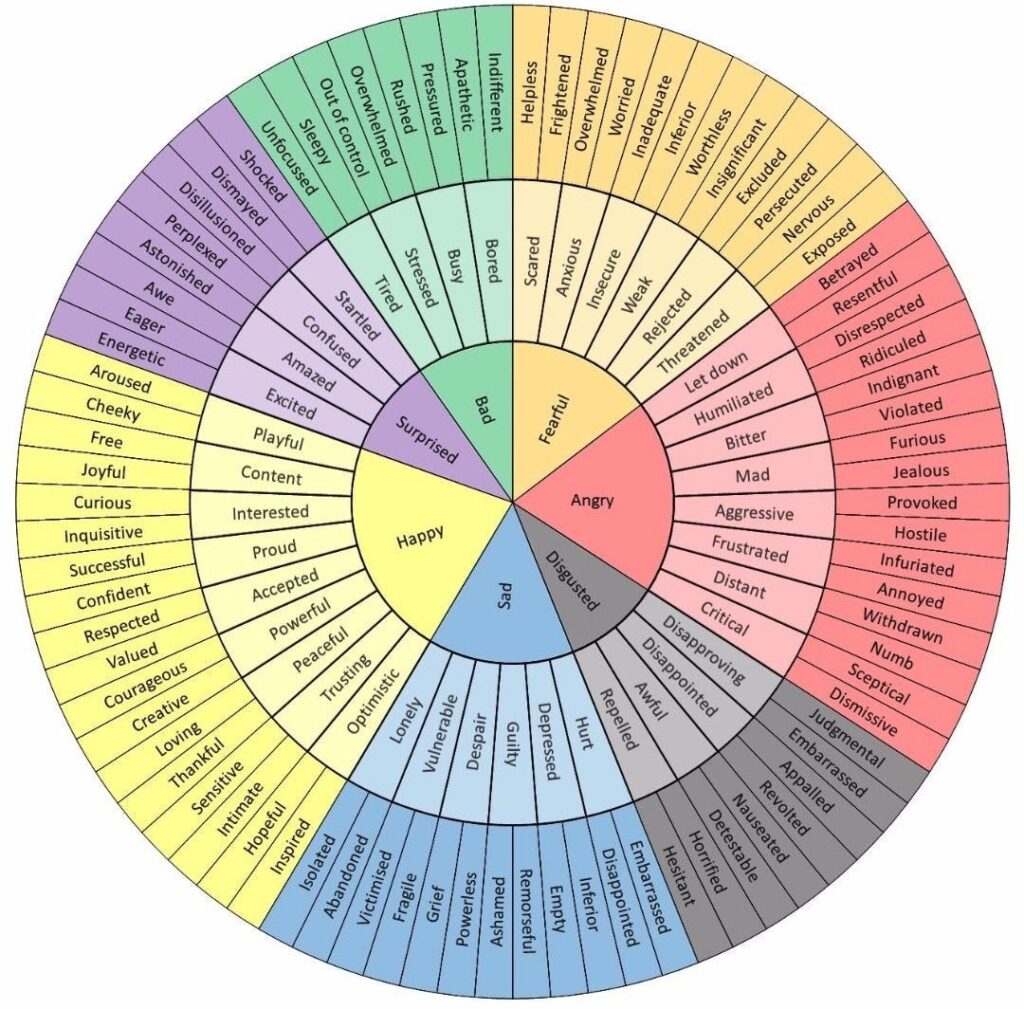
Image source: medium.com
Research shows that accurately labeling emotions reduces emotional intensity and improves emotional regulation by helping the brain process feelings more clearly (Lieberman et al., 2007). The more specific you can be with emotional language, the easier it becomes to understand what you need in that moment.
3. Create a pause before responding
When emotions feel intense, give yourself a brief pause before reacting. Slow breathing, counting, or stepping away momentarily can calm the nervous system. Research on emotion regulation shows that even short pauses can reduce impulsive reactions and support better decision-making (Gross, 2015).
4. Reflect after emotional situations
After a strong emotional experience, take time to reflect. Think about what triggered the emotion, how you responded, and what you might try differently next time. This reflective process strengthens emotional learning and self-regulation skills (Zeidner, Matthews, & Roberts, 2012).
5. Notice emotional patterns over time
Pay attention to repeated triggers or emotional themes in your life. Patterns often reveal unmet needs or boundaries. Recognizing these patterns increases self-awareness, a core component of emotional intelligence (Salovey & Mayer, 1990).
6. Practice emotional awareness in relationships
Observe tone, facial expressions, and timing during conversations. Try listening without interrupting or planning a response. Developing sensitivity to others’ emotions strengthens empathy and social understanding (Goleman, 1995).
7. Be patient and compassionate with yourself
Emotional skills take time to develop. Self-criticism can block learning, while self-compassion supports growth. Research shows that self-compassion is linked to better emotional regulation and psychological well-being (Neff, 2003).
Conclusion
Emotional intelligence is not about being calm all the time or handling every situation perfectly. It is about noticing your emotions, understanding them, and responding in ways that protect both your mental health and your relationships.
If you recognized signs of low emotional intelligence in yourself, that does not mean you are failing. It often means you were never given the tools to work with emotions in a healthy way. These skills are learned, shaped by experience, and open to change at any stage of life.
The most important step is awareness. When you start paying attention to your emotional patterns without judgment, growth naturally follows. With small, consistent efforts, emotional intelligence can become a skill that supports resilience, connection, and well-being over time.
Sources
Barrett, L. F., Gross, J. J., Christensen, T. C., & Benvenuto, M. (2001). Knowing what you’re feeling and knowing what to do about it: Mapping the relation between emotion differentiation and emotion regulation. Cognition & Emotion, 15(6), 713–724.
Brackett, M. A., Rivers, S. E., & Salovey, P. (2011). Emotional intelligence: Implications for personal, social, academic, and workplace success. Social and Personality Psychology Compass, 5(1), 88–103.
Denham, S. A., Bassett, H. H., & Wyatt, T. (2003). The socialization of emotional competence. Handbook of Emotional Development, 614–637.
Goleman, D. (1995). Emotional intelligence: Why it can matter more than IQ. Bantam Books.
Gross, J. J. (2015). Emotion regulation: Current status and future prospects. Psychological Inquiry, 26(1), 1–26.
Kashdan, T. B., & Rottenberg, J. (2010). Psychological flexibility as a fundamental aspect of health. Clinical Psychology Review, 30(7), 865–878.
Lieberman, M. D., Eisenberger, N. I., Crockett, M. J., Tom, S. M., Pfeifer, J. H., & Way, B. M. (2007). Putting feelings into words: Affect labeling disrupts amygdala activity. Psychological Science, 18(5), 421–428.
Neff, K. D. (2003). Self-compassion: An alternative conceptualization of a healthy attitude toward oneself. Self and Identity, 2(2), 85–101.
Petrides, K. V. (2009). Psychometric properties of the Trait Emotional Intelligence Questionnaire (TEIQue). Advances in the Measurement of Emotional Intelligence, 85–101.
Salovey, P., & Mayer, J. D. (1990). Emotional intelligence. Imagination, Cognition and Personality, 9(3), 185–211.
Schutte, N. S., Malouff, J. M., Hall, L. E., Haggerty, D. J., Cooper, J. T., Golden, C. J., & Dornheim, L. (1998). Development and validation of a measure of emotional intelligence. Personality and Individual Differences, 25(2), 167–177.
Schutte, N. S., Malouff, J. M., Thorsteinsson, E. B., Bhullar, N., & Rooke, S. E. (2007). A meta-analytic investigation of the relationship between emotional intelligence and health. Personality and Individual Differences, 42(6), 921–933.
Taylor, G. J., Bagby, R. M., & Parker, J. D. A. (1997). Disorders of affect regulation: Alexithymia in medical and psychiatric illness. Cambridge University Press.
Wong, C. S., & Law, K. S. (2002). The effects of leader and follower emotional intelligence on performance and attitude. The Leadership Quarterly, 13(3), 243–274.
Zeidner, M., Matthews, G., & Roberts, R. D. (2012). What we know about emotional intelligence: How it affects learning, work, relationships, and our mental health. MIT Press.